When tax season comes around in Nigeria, it can be a bit overwhelming just thinking about all those tax forms and the official documents you need to fill out. Nigerian Tax Forms & Documentation probably aren’t most people’s idea of an exciting topic, but honestly, it matters a lot. Whether you’re employed in Lagos, running your own business in Abuja, or just starting as a freelancer, understanding how to find, download, and fill these forms can save you headaches and money, down the road. In this article, let’s walk through everything you actually need to know, with some real-life advice and a few of those “I learned this the hard way” moments included.
Understanding Tax Forms in Nigeria
Filing taxes in Nigeria means dealing with paperwork, sometimes too much of it. But these forms are more than bureaucratic hurdles, they’re legal requirements. Think of them as the official record showing you’ve paid your dues (literally), and that you’re on the right side of things with the Federal Inland Revenue Service (FIRS) or your state tax office.
Why Tax Forms Matter: Legal and Compliance Insights
Maybe you’ve heard stories about missed filings or incorrect forms leading to fines or visits from tax authorities. That actually happens. Tax forms aren’t just a technicality, they’re the written proof that you’ve reported your income and paid your taxes. Without this documentation, you might not be able to get certain government services or clearances. For example, many Nigerians can’t renew their business licenses without a recent e-Tax Clearance Certificate. I know someone who had to delay a big contract because of a missing form.
Who Needs to File Nigerian Tax Forms?
You might think tax forms are only for fancy business owners or big companies, but that’s not the case. If you earn income in Nigeria, whether you’re an employee, a small business owner, or you do side gigs, there’s a form with your name on it. The rules change a bit based on where you live or work, especially for Lagos residents, but in general, if you’re earning, you’re filing. Even students doing paid internships sometimes need to file, which sounds wild but, yes, it happens.
For a foundational overview of who is required to pay personal income tax in Nigeria, see this in-depth guide on eligibility and rules.
Types of Nigerian Tax Forms Explained
It’s one thing to know you need a tax form, but which one? Well, Nigeria’s got quite a few, each serving its own purpose. Some are federal (everyone uses them), and others are specific to states.
Federal Inland Revenue Service (FIRS) Tax Forms Overview
FIRS handles most national taxes, so, business owners, self-employed people, and companies deal with FIRS a lot. Their forms range from annual tax returns to clearance requests. A few names keep popping up: Form A for individual tax returns, Form H for contractors, and, recently, more things are moving online.
If you're not sure about the basics of Nigerian tax rules, see the Introduction To Nigerian Tax Laws for a down-to-earth explanation.
Lagos State and Other States’ Tax Forms
Lagos IRS (LIRS) oversees all personal and employee taxes in Lagos. If you live or work in Lagos, you’ll probably download your personal income tax return from their platform instead of the FIRS website. Other states, like Oyo or Rivers, have their own forms and systems too. It’s annoying, sometimes, that rules or form designs are not entirely the same across states, maybe it’s a work in progress.
Frequently Used Personal and Corporate Tax Forms
Personal Income Tax Return Form A Nigeria
This is the bread-and-butter form for individuals, employees, businesspeople, everyone who earns personal income must file it.
PAYE Tax Form Nigeria
Companies use these forms to report Pay As You Earn (PAYE) deductions from employee salaries. If you’re working a salary job, this is the form your boss (or HR) fills.
e-Tax Clearance Certificate (eTCC) Form Nigeria
This digital certificate shows you’re up to date with your taxes. Needed for contracts, tenders, or many official processes.
Other Essential Forms (Form H, C, F3, L1, etc.)
- Form H: Used by contractors and suppliers for tax records
- Form C: Corporate income tax filings
- Form F3 and L1: Various special registrations or declarations
Here’s a quick table for clarity:
| Form Name | Use Case | Where to Get It |
|---|---|---|
| Form A | Personal income tax | FIRS, LIRS websites |
| PAYE Form | Employee deduction reporting | FIRS, LIRS |
| eTCC | Tax clearance certificate | FIRS self service |
| Form H, C, F3, L1 | Contracts, corporate filings, others | FIRS website |
Step-by-Step: How to Download Nigerian Tax Forms
If you’ve ever struggled with government websites, you’re not alone, I’ve had download links refuse to open on my phone for no good reason. But, it’s getting easier now.
Downloading from FIRS Website
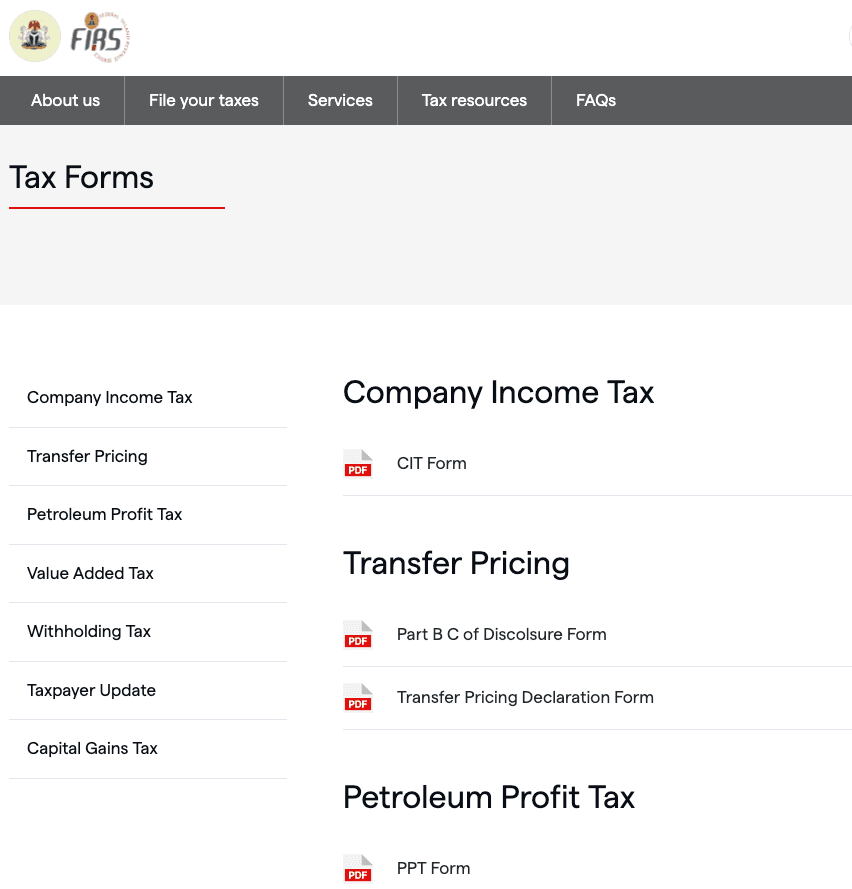
- Go to the official FIRS Tax Forms page.
- Scroll to find the form you need (sometimes filenames aren’t super clear, so check twice).
- Click the download icon or “PDF” link (if blocked by pop-ups, disable your browser pop-up blocker).
- Save the file to your device.
For a clear, practical guide on filing your taxes, including required documents and step-by-steps, check out How to File Taxes in Nigeria.
How to Complete Nigerian Tax Forms
Okay, downloading is only half the battle. Filling them correctly is the real deal. Tax forms often look intimidating, but many questions simply need you to copy info from your payslip or bank statements.
Key Sections Explained (With Examples)
- Personal details: Your name, address, taxpayer ID (TIN). Double-check spellings here.
- Income: List your sources of income, monthly or annual as required.
- Allowable deductions: Enter things like pension, NHF, voluntary contributions.
- For PAYE and business returns: Employer’s name, company registration number, employee breakdown.
Say, for instance, you're filling Form A, make sure your TIN matches what's on your previous tax documents, otherwise it might get rejected. For more about TIN and why it matters, see Tax Identification Number (TIN) In Nigeria.
Common Mistakes to Avoid When Filling Nigerian Tax Forms
Some issues come up over and over:
- Wrong or missing TIN (Taxpayer Identification Number).
- Forgetting to attach supporting documents.
- Signing in the wrong place, or not signing at all.
- Mixing up gross and net income.
- Not rounding figures where the form requires it.
I’ve had to fix friends’ forms after such slip-ups, and trust me, it’s better to triple-check or ask before submitting.
Where to Get Help: Contact Details and Official Resources
If you’re genuinely stuck, don’t guess. Contact FIRS or your state tax office:
- FIRS Call Centre: 09074444441 (calls/WhatsApp)
- Lagos IRS Help Desk: Contact Page
You can also ask a professional tax consultant, especially for business forms or if your tax history is complicated. Or, if you need quick answers, try the Tax Chatbot for Nigerian Tax Questions.
Nigerian Tax Documentation FAQs
Are E-Forms and Scanned Submissions Accepted?
Yes, mostly. FIRS and Lagos IRS now encourage e-filing and support scanned forms, especially for eTCC applications or online PAYE filings. However, always check the latest announcement, some forms may still need physical submission, depending on your state or office.
Deadlines for Tax Return Filing
For individuals (like with Form A), annual returns are due by March 31st for the previous year. Companies vary, but usually within six months after accounting year-end. Missing deadlines can result in penalties, so, if in doubt, submit early.
Additional Resources & Latest Updates
Useful Links (FIRS, Lagos IRS, Government PDF Libraries)
- Download Nigerian Tax Forms (FIRS Official)
- FIRS eTax Self-Service Portal
- Nigerian Tax Authorities Contact List (FIRS)
- Nigerian Tax Insights | MyTax Blog – for news, updates, and tax tips
Staying Up-to-Date with Changes in Tax Forms
Honestly, tax rules in Nigeria change more often than most people expect. Subscribe to email alerts from FIRS, check your local tax authority’s website every March, and don’t rely entirely on word of mouth, rumors about tax deadlines or new requirements are common but often wrong.
Final Thoughts
Handling Nigerian Tax Forms & Documentation isn’t anyone’s dream task, but it doesn’t have to be scary. Downloading the right Nigerian tax forms, understanding what each means, and filling out the documents accurately is a big step toward avoiding legal trouble and staying on the good side of the authorities. If you’re confused, double-check with official sources or reach out for help, tax agents exist for a reason! And maybe next year these forms will finally get simpler... or at least that’s what we can hope for.
This article includes links to official Nigerian government resources, but for complex cases or the latest updates, always consult a certified tax professional or the appropriate authority.